The Unconditional Forgiveness I Had to Unlearn
I believed the forgive-them-whether-or-not-they're-sorry version for years. Scripture took it apart.

“Be kind to one another, tenderhearted, forgiving one another, as God in Christ forgave you.”Ephesians 4:32 ESV

For a lot of my life, I believed in unconditional forgiveness. Somebody would come to me, hurting over what a family member did, or a friend who never so much as said sorry, and I knew the answer before they finished the sentence. You have to forgive him. It's not for him, it's for you. Let it go so they can't hold you captive. I said it to other people, and I said it to myself. I believed it, because that's what the emotional science says. And that's what most of the pastors in the pulpits in the churches I attended said. When your pastor and Psychology Today agree on something, it has to be true, doesn't it?
Nobody I knew ever checked it against the Bible. Why would we? Unconditional forgiveness sounds like grace. It has the shape of grace. You forgive whether they repent or not, whether they're sorry or not, whether they ever come back around or not, and you do it because Jesus forgave you and you're supposed to be like Him. Put it that way, and it sounds airtight. It sounds like the most Christian thing a person could say.
Then the verse I leaned on the hardest is the one that took the whole thing apart.
Ephesians 4:32. "Forgive one another, as God in Christ forgave you." I had quoted it a hundred times as the proof. What finally stopped me was that little word as. Forgive as God forgave you, in the same manner He did. The verse wasn't telling me to forgive however I felt was gracious. It was pointing me at how God actually does it and telling me to match Him.
So I went looking. I wanted to find God forgiving people who hadn't repented, because I'd been telling everyone that's the standard. I looked and looked. I couldn't find it. Not once. Everywhere God forgives, somebody turns. The whole offer sits on the table for all of us, freely, at tremendous cost to Him... but it gets applied when a sinner comes home. That's not a loophole. That's the pattern from Genesis to Revelation. And if God never once grants forgiveness without repentance, then the popular definition was asking me to forgive in a way my own Father never has.
Jesus said it plainly enough that I don't know how I missed it for so long.
If God never once grants forgiveness without repentance, then the popular definition was asking me to forgive in a way my own Father never has.
"If your brother sins, rebuke him, and if he repents, forgive him." Luke 17:3 ESV
Now, I want to be careful, because there's a real question about your own heart that none of this touches, and I've written about that at length. Love is unconditional. Bitterness is never allowed, not for a single day. What ties to repentance is that last transaction of forgiveness and the reconciliation it opens the door to. If you want the full argument, with the harder objections answered, it's in this post and in this one on forgiving someone who isn't sorry. I also worked through the whole doctrine slowly, and it turned into a book.
And this is the part I'd rather not admit. The old view gave me a place to hide. When forgiveness was unconditional, I could close the file on somebody, calling the whole thing settled, yet choosing never to let them into my life again. "I forgive you, but I can't forget what you did, so we just can't be around each other. Ever." The slogan let me feel finished. And the honest truth is that I actually used that same line with people who had actually repented! Talk about hypocrisy. Nobody told me that while I stood there quoting the gracious version. The biblical version is harder, not easier. It took away the hiding place.
So you can imagine my surprise when I heard a popular podcast say all of this out loud. Alisa Childers did an episode with Teasi Cannon called "Biblical Forgiveness Isn't What You've Been Told", making the case that forgiveness is tied to repentance and that the forgive-and-forget therapy version isn't what Scripture teaches. Fifteen years ago, that episode would have offended me. I'd have called it cold. I sat there instead, feeling relieved, and a little less alone.
I don't have a tidy bow for this. I spent years repeating something that sounded like Jesus and wasn't. If you're still where I was, I'm not going to rush you out of it. Go read the longer posts, or the book if you want the whole thing. Mostly, I just needed to say out loud that I got it wrong, and that the wrong version let me keep grudges I should have repented of. Let me withhold reconciliation that was deserved. That's been sitting on me for a while. I figured I'd say it.
Further Study
I’ve hand-selected these resources because they’ve been vital to my own study. Note: As an Amazon Associate, I earn a small commission from qualifying purchases at no extra cost to you. This helps anchor the mission of The Twice Found.
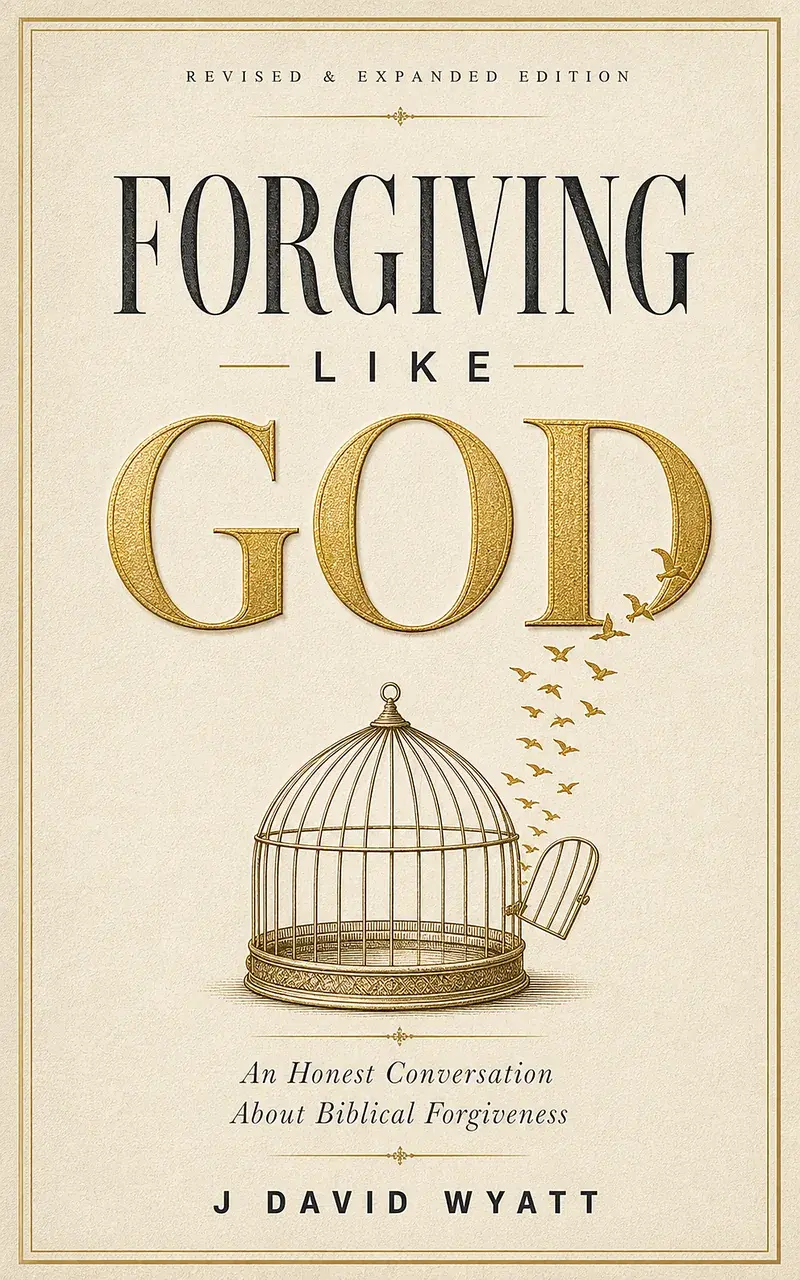
Forgiving Like God: A Conversation with Frank, an AI Persona
by J. David Wyatt
A Scripture-first conversation about repentance, love, forgiveness, and reconciliation. The book asks whether Christians have let slogans replace God's own pattern of forgiveness.
ADD TO YOUR LIBRARY ➔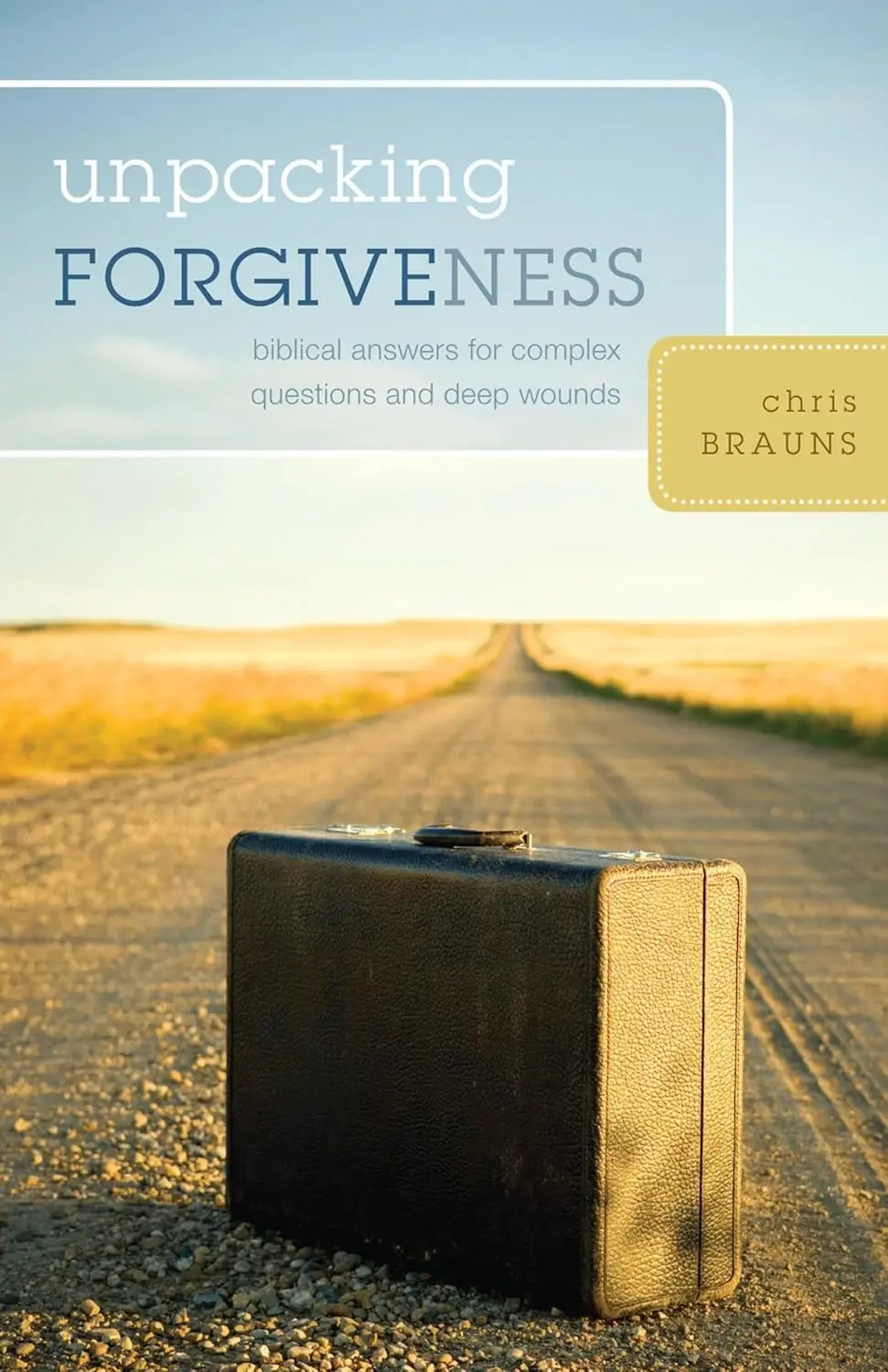
Unpacking Forgiveness: Biblical Answers for Complex Questions and Deep Wounds
by Chris Brauns
A careful treatment of forgiveness that pushes back against shallow therapeutic slogans and deals honestly with repentance, reconciliation, and deep wounds.
ADD TO YOUR LIBRARY ➔
About David Wyatt
David Wyatt writes about Biblical truth and its practical application in daily life from his home in central North Carolina. His work focuses on helping Christians understand and live out their faith authentically in today's world.