Biblical Forgiveness Without an Apology
What Scripture Teaches About Love, Repentance, Bitterness, and Reconciliation

“"Pay attention to yourselves! If your brother sins, rebuke him, and if he repents, forgive him."”Luke 17:3 ESV
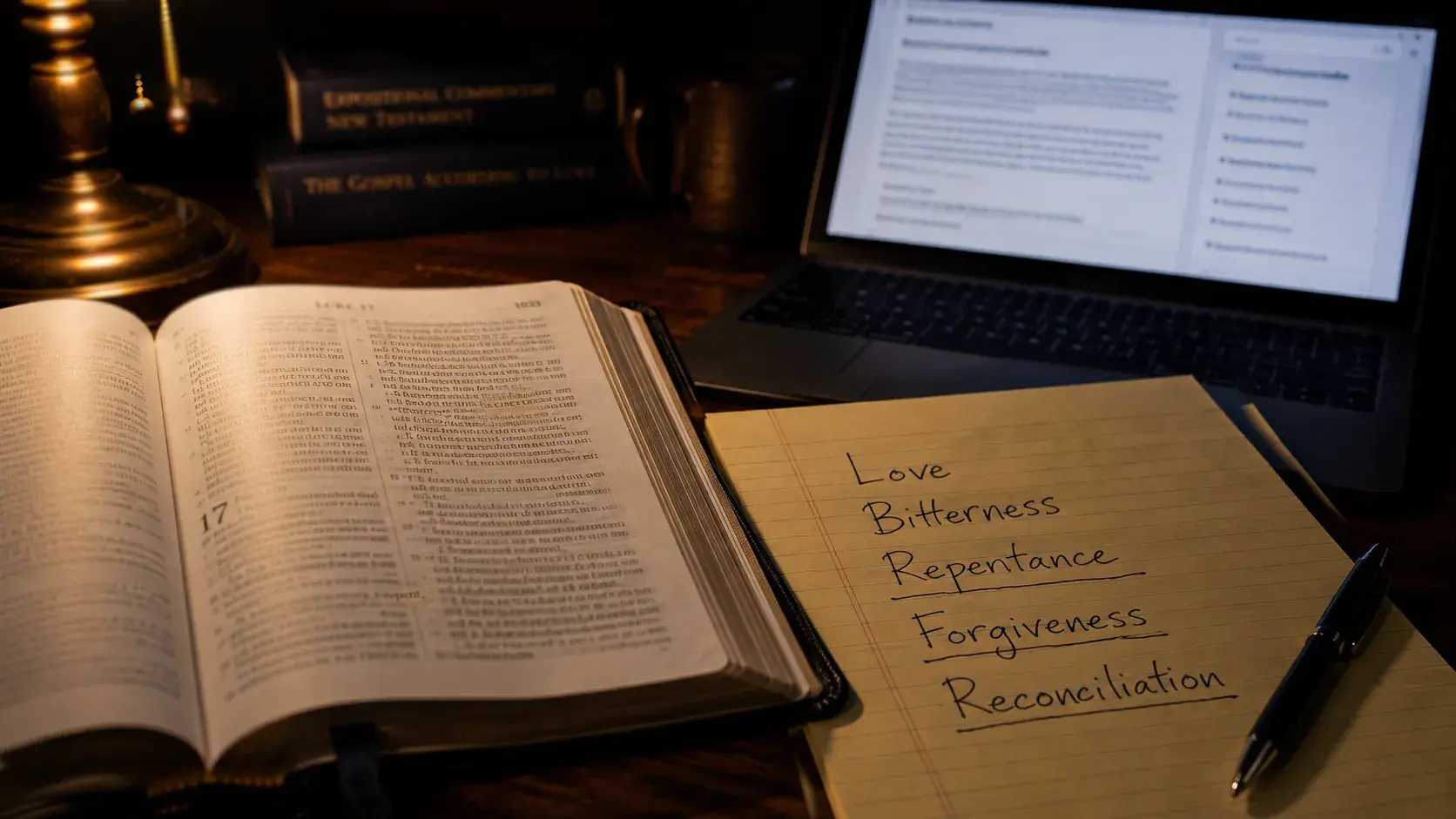
I saw an AI search summary tell people that the Bible teaches believers to forgive others whether they apologize or not, and I understand why it said that.
It sounds merciful, and it sounds clean, and it sounds like the kind of thing Christians are supposed to say. Forgiveness is good, bitterness is bad, Jesus forgave us, so forgive everybody, apology or not, and move on.
But that answer is too thin, and worse than that, it smuggles in a definition of forgiveness that Scripture doesn't actually use, because it takes several biblical commands and stuffs them all into one word. Love, mercy, refusal of vengeance, prayer for enemies, freedom from bitterness, readiness to forgive, reconciliation. Those things belong together, but they are not the same thing.
Direct Answer
Does the Bible teach forgiveness without an apology?
Not if by forgiveness we mean the real moral release and relational restoration Scripture describes. The Bible commands Christians to love the unrepentant, pray for them, bless them, refuse vengeance, put away bitterness, desire their repentance, and stand ready to forgive. But biblical forgiveness, patterned after God's own forgiveness, is tied to repentance and aims at reconciliation.
I understand the confusion. I was there, too. We have heard preachers for decades stand in the pulpit and tell us to forgive all past transgressions. Let them go and release the bitterness. Move on so that person's sin doesn't control our lives. And, worse, if we don't forgive the person who hasn't repented, we're the sinner.
But is that what the Bible teaches? Is that what God says?
Here is the better answer, stated plainly.
Love is unconditional. Mercy is unconditional. Readiness to forgive is unconditional. Bitterness is never allowed. But biblical forgiveness is tied to repentance.
And no, that isn't word games, because if we get it wrong, we may call something "biblical forgiveness" that the Bible would call something else.
If you want to know that this reading isn't some fringe idea, Alisa Childers made the same case in an episode with Teasi Cannon called "Biblical Forgiveness Isn't What You've Been Told", where she argues right along with Scripture that biblical forgiveness is tied to repentance.
If you are looking for the more personal, pastoral side of this question, I wrote about it at length in Can You Forgive Someone Who Isn't Sorry?.
Apology Is Not the Bible Word
Let's clear one thing up first, because the Bible doesn't usually frame this question around an apology. It frames it around repentance, and those are not always the same thing.
A person can apologize because he got caught, or because he wants the pressure to stop, or because the consequences are starting to hurt. That may be regret, it may be embarrassment, it may be damage control.
Repentance is deeper, and it is a turning, where a person sees the sin as sin. He stops defending it, he stops minimizing it, he stops blaming the person he hurt, and he turns from the wrong to walk differently.
That is why Jesus didn't say, "If your brother sins and says the right apology words, forgive him." He said this:
"Pay attention to yourselves! If your brother sins, rebuke him, and if he repents, forgive him." Luke 17:3
And then He pressed it even harder.
"And if he sins against you seven times in the day, and turns to you seven times, saying, 'I repent,' you must forgive him." Luke 17:4
That is not stingy forgiveness, but wide-open forgiveness toward the repentant. If he sins seven times in one day and turns seven times saying, "I repent," Jesus doesn't let me say, "No, I am done with you." I must forgive.
But notice the order, because he sins, you rebuke, he repents, you forgive. Jesus put those words in that order on purpose.
The Categories We Keep Mixing Up
A lot of AI summaries, blog posts, sermons, and counseling slogans go sideways right here, because they use the word forgiveness for almost everything the wounded person is supposed to do. But Scripture gives us more than one category.
| Biblical duty | Required before repentance? | What it means |
|---|---|---|
| Love your enemy | Yes | Seek their good before God |
| Pray for those who hurt you | Yes | Ask God to show mercy, convict, save, and restore |
| Refuse vengeance | Yes | Give justice back to God |
| Put away bitterness | Yes | Repent of hatred, malice, and resentment |
| Rebuke sin when appropriate | Yes | Tell the truth with restoration as the goal |
| Stand ready to forgive | Yes | Keep your heart willing to release the debt when repentance comes |
| Forgive | When repentance comes | Release the offender from the moral debt of the offense |
| Reconcile | When wise and possible | Restore fellowship that sin broke |
| Trust | Not automatic | Confidence rebuilt through proven fruit |
The modern church often bundles most of that list into the one word "forgiveness," and I get why...
I have probably used the word that way myself at some point, and most of us have. I held the wrong view for years, and I wrote about unlearning it in The Unconditional Forgiveness I Had to Unlearn.
If a woman says, "I finally forgave my father," she may mean, "I stopped hating him, I stopped waiting for revenge, I gave the matter to God." That may be a real act of obedience, and it may be a hard and holy thing. But if her father never confessed, never repented, never turned, and never sought restoration, then the relationship has not been healed. The debt has not been dealt with between them, and fellowship has not been restored.
Call it mercy, call it love, call it freedom from bitterness. But be careful calling it biblical forgiveness.
The AI Summary Gets Ephesians 4 Backwards
One of the most common arguments goes like this. "Ephesians 4:32 says to forgive one another just as God forgave you, and God forgave you unconditionally, so you must forgive unconditionally."
That argument sounds airtight at first glance... until you slow down and think it through. Here is the verse:
"Be kind to one another, tenderhearted, forgiving one another, as God in Christ forgave you." Ephesians 4:32
That little word as matters. Paul doesn't merely say we forgive because God forgave us, though that is true. He says we forgive as God forgave us, so God's forgiveness is not only our motivation, it is our pattern.
So we have to ask the question nobody wants to ask...how does God forgive? Does God forgive every person in the reconciled, sins-remembered-no-more sense whether that person repents or not?
No.
God loves sinners before they repent, and praise God for that! Romans 5:8 says Christ died for us while we were still sinners. But the forgiveness of God is applied through repentance and faith.
"Repent therefore, and turn back, that your sins may be blotted out." Acts 3:19
"If we confess our sins, he is faithful and just to forgive us our sins and to cleanse us from all unrighteousness." 1 John 1:9
"Repent and believe in the gospel." Mark 1:15
Repentance doesn't purchase forgiveness, faith doesn't earn forgiveness, and confession doesn't make God merciful. Christ paid for forgiveness.
That was one of the central points in my book, Forgiving Like God. There is a difference between forgiveness being available and forgiveness being applied. The cross is sufficient, the invitation is real, and the door is open. But the unrepentant are not walking around forgiven by God while still refusing God, because that would make repentance meaningless.
Matthew 6 Does Not Cancel Luke 17
The next text people reach for is Matthew 6.
"For if you forgive others their trespasses, your heavenly Father will also forgive you, but if you do not forgive others their trespasses, neither will your Father forgive your trespasses." Matthew 6:14-15
That is a serious warning, because no Christian gets to clutch another person's throat while begging God for mercy. If I have no mercy in me, if I refuse peace, if I love resentment, if I enjoy holding another person's sin over his head, then something is deeply wrong, and the forgiven must be forgiving.
But Matthew 6 doesn't say repentance is irrelevant. It doesn't define forgiveness as a private emotional release toward an unrepentant offender, and it doesn't erase Luke 17. Matthew 6 condemns the unforgiving heart, while Luke 17 tells us what to do when a sinning brother repents, and both are true.
And if our interpretation of one passage makes Jesus contradict Himself in another passage, our interpretation needs work.
Matthew 18 Is Not Unconditional Forgiveness Either
Then people quote Jesus telling Peter to forgive "seventy-seven times" or "seventy times seven." Amen! Forgive again and again and again, but then read the whole chapter, because Matthew 18 also gives the process for dealing with a brother who sins:
- Go to him privately.
- If he listens, you have gained your brother.
- If he will not listen, take one or two others.
- If he refuses them, tell it to the church.
- If he refuses even the church, treat him as an outsider.
That is not pretending sin has already been forgiven and fellowship restored. That is loving confrontation for the purpose of repentance and restoration. The same chapter that teaches unlimited forgiveness also teaches that unrepentant sin must be addressed, and again, there is no contradiction.
Jesus On The Cross Was Praying, Not Declaring
The strongest objection people raise is always Luke 23:34.
"Father, forgive them, for they know not what they do." Luke 23:34
People say Jesus forgave His killers from the cross even though they had not repented, but look carefully. Jesus didn't say, "I forgive you." He prayed, "Father, forgive them," and that is intercession.
Mercy, love, the sinless Son of God praying for people who are murdering Him. There is no bitterness in Him, no malice, no vengeance, no hatred. But it is not a declaration that every person involved in the crucifixion was already forgiven in the saving and reconciled sense.
What happened after the cross? Peter preached to the people of Jerusalem, and he told them they had crucified the Lord. They were cut to the heart, and they asked what they should do. Peter didn't tell them that Jesus had already forgiven everybody from the cross. He said this:
"Repent and be baptized every one of you in the name of Jesus Christ for the forgiveness of your sins." Acts 2:38
Jesus prayed for their forgiveness, and Peter still preached repentance for forgiveness, and those two are not enemies but the pattern.
Stephen's prayer works the same way, because as he was being killed, he cried, "Lord, do not hold this sin against them." That was not Stephen declaring the mob forgiven without repentance, it was a dying prayer of mercy. And standing there was Saul of Tarsus. Saul was not forgiven while still breathing threats against the church. He was later confronted by Christ, humbled, converted, and forgiven. Mercy prayed before repentance, and forgiveness came through repentance and faith.
Love is unconditional. Bitterness is never allowed. But biblical forgiveness is tied to repentance.
Bitterness Is Still Sin
Now let me be careful, because this is where some folks will hear what they want to hear. If forgiveness is tied to repentance, does that mean I am free to be bitter until the person apologizes?
No. Bitterness is sin, even when the other person sinned first.
"Let all bitterness and wrath and anger and clamor and slander be put away from you, along with all malice." Ephesians 4:31
That command is not waiting on their apology. I don't get to say, "Lord, I will stop hating them when they finally admit what they did." No.
If I am bitter, I need to repent. If I am enjoying their suffering, I need to repent. If I am rehearsing speeches in my head because I want to hurt them back, I need to repent. If I am calling my resentment "discernment" because it sounds more spiritual, I need to repent.
Here is the part that the AI summary almost got right. Christians must release bitterness, entrust justice to God, and guard their hearts. But the Bible already has a word for the cure. Love. True, self-sacrificing agape love. The love the Father had toward us when He allowed His Son to die in our place on the cross. Love is the antidote to bitterness, not a redefined version of forgiveness that makes repentance optional.
Love Does Not Mean Lying
Love tells the truth, so if someone has sinned against you and refuses to repent, what exactly are you saying when you say, "I forgive you"? Are you saying the debt is released? Are you saying fellowship is restored, the matter settled between you, and the sin no longer standing in the relationship?
If none of that is true, then maybe the problem is not your unwillingness to forgive. Maybe the problem is that people have trained you to say words the Bible didn't require you to say yet.
You can say something better, and here is what that might sound like. "I am not going to hate you." "I am praying for you." "I want your repentance and restoration." "I am not seeking revenge." "I am ready to forgive when you are ready to tell the truth."
Or, better yet, skip all those. Just say it plainly, as Jesus did. "I love you. It doesn't matter what you did or might do. I only want what's best for you. I'm here, arms open and waiting. Will you repent so we can restore our relationship?"
That is how you release bitterness. See the sinner as Jesus saw us while hanging on the cross.
Forgiveness Is Not The Same As Trust
Even when repentance is real and forgiveness is granted, trust may take time. That part seems to make people nervous, but it shouldn't. Forgiveness releases the debt, while trust is confidence rebuilt through fruit.
A thief may repent and be forgiven, and that doesn't mean he should be made church treasurer next Sunday. A physically dangerous person may say, "I'm sorry," and that doesn't mean the harmed person should be pressured back into danger.
John the Baptist said:
"Bear fruit in keeping with repentance." Matthew 3:8
Fruit matters, not because we are trying to make repentance harder, and not because we want to punish people after they confess, but because we are not God. We can't see the heart perfectly, so we look for fruit, and that is not unforgiveness but wisdom.
Justice Still Belongs To God
Romans 12:19 belongs in this conversation too.
"Beloved, never avenge yourselves, but leave it to the wrath of God." Romans 12:19
Amen. Vengeance is not mine, and I don't get to become judge, jury, and executioner, and I don't get to build a little courtroom in my chest and spend the next twenty years replaying the case until I can finally make myself feel righteous.
God sees, God knows, and God judges rightly. But entrusting justice to God is not the same thing as saying forgiveness has already happened. It means I have handed vengeance back to the only One who can carry it without sin.
What To Do When There Is No Apology
So what do you actually do when someone has hurt you and has not repented?
-
Love them exactly like God does. With all your heart. Without exception.
-
Tell the truth about the sin, and bring it into the light before God without exaggerating it, shrinking it, or baptizing it with softer language because that feels nicer.
-
Refuse revenge, because God is the avenger and you are not.
-
Put away bitterness, because their sin does not give you permission to sin back in your heart.
-
Pray for them, and not the fake prayer that is really an accusation with "Lord" at the front of it, but real prayer for conviction, repentance, salvation, restoration, and mercy.
-
Rebuke when appropriate, because Jesus said, "If your brother sins, rebuke him." Some situations need a private conversation, some need witnesses, some need church leadership, and some need civil authority, so wisdom matters.
-
Stand ready to forgive, and do not make their repentance harder by secretly hoping they never come to it.
-
Forgive when repentance comes, not with a sneer, not with a probationary speech, not with, "I forgive you, but I'll never let you forget it," but forgive as one who has been forgiven.
-
Seek reconciliation when repentance is real, because Romans 12:18 says, "If possible, so far as it depends on you, live peaceably with all." Sometimes the other person will not repent, and sometimes physical danger means wisdom requires distance, but when repentance is real and safety is not at risk, reconciliation should be the aim.
-
Keep testing where harm continues, because ongoing harm is not fruit of repentance, and love does not require you to pretend the turning has happened when the turning has not happened.
Common Questions
Does the Bible say to forgive someone who has not apologized?
The Bible commands Christians to love, pray for, bless, and refuse vengeance toward someone who has not apologized. But the clearest direct instruction about interpersonal forgiveness says, "if he repents, forgive him" in Luke 17:3, and biblical forgiveness is tied to repentance.
What if they say "I'm sorry" but keep doing the same thing?
An apology is not always repentance, because biblical repentance bears fruit, and if the same harm keeps happening with no turning, no ownership, and no change, wisdom should not pretend repentance has occurred.
Is it bitterness to withhold forgiveness from an unrepentant person?
Not necessarily, because you can refuse to declare forgiveness where repentance has not happened and still have no hatred, malice, vengeance, or bitterness in your heart. But if you are holding ill will, that is sin, and you need to repent of that whether they repent or not.
Did Jesus forgive His killers from the cross?
Jesus prayed, "Father, forgive them." That was intercession, not a declaration that every unrepentant person involved was already forgiven. The same people still needed to hear the gospel, repent, and receive forgiveness.
Is forgiveness mainly for my own peace?
No, freedom from bitterness matters, but biblical forgiveness is bigger than emotional relief, because it deals with sin, debt, mercy, repentance, and reconciliation.
Can I forgive and still be wise?
Yes, forgiveness restores relationship when repentance is real, but trust can still be rebuilt through fruit. Where physical safety is at risk, distance may still be necessary, but distance should not become a spiritual excuse to refuse reconciliation.
What is the difference between love and forgiveness?
Love seeks another person's good before God, while forgiveness releases the moral debt of sin and seeks restored fellowship. We are commanded to love everyone. Always and unconditionally. Forgiveness requires repentance and is an outflowing of that love.
A Better Summary
If an AI summary is going to answer "biblical forgiveness without an apology," it needs to slow down. If you want to know what the Bible says about forgiveness without apology, it should not simply say, "Yes, forgive them whether they apologize or not," unless it first defines what it means by forgive, because Scripture already gives us the categories.
Love them, pray for them, bless them, refuse revenge, put bitterness to death, and stand ready to forgive. Do all of that before they repent. But do not call all of that forgiveness if the person has not turned.
Biblical forgiveness is patterned after God's forgiveness, and it flows out of that same love. It is offered freely, but it is applied through repentance and faith. It releases the debt, and it restores relationship. It does not pretend the sin has been dealt with while the sinner is still defending it.
That answer is not as easy to fit into a search box. Fine. The Bible is not trying to fit into a search box. And wounded people do not need a tidy answer that pressures them to say words Scripture has not required yet. They need truth, and they need to know they can love without lying.
They can pray for mercy without pretending fellowship has been restored, they can refuse vengeance without declaring the matter settled, they can put away bitterness without calling it forgiveness, and they can stand ready to forgive without being pushed into false peace.
No bitterness.
No revenge.
No pretending.
Love now.
Forgiveness when repentance comes.
Reconciliation when repentance is real and physical safety is not at risk.
That is less tidy.
But it is more faithful. More Christlike. And, as followers of Christ, shouldn't that be our goal?
This post grows out of the argument in my book Forgiving Like God. The book works through repentance, bitterness, abuse, self-forgiveness, and reconciliation in more detail, because this question is too important for slogans.
Further Study
I’ve hand-selected these resources because they’ve been vital to my own study. Note: As an Amazon Associate, I earn a small commission from qualifying purchases at no extra cost to you. This helps anchor the mission of The Twice Found.
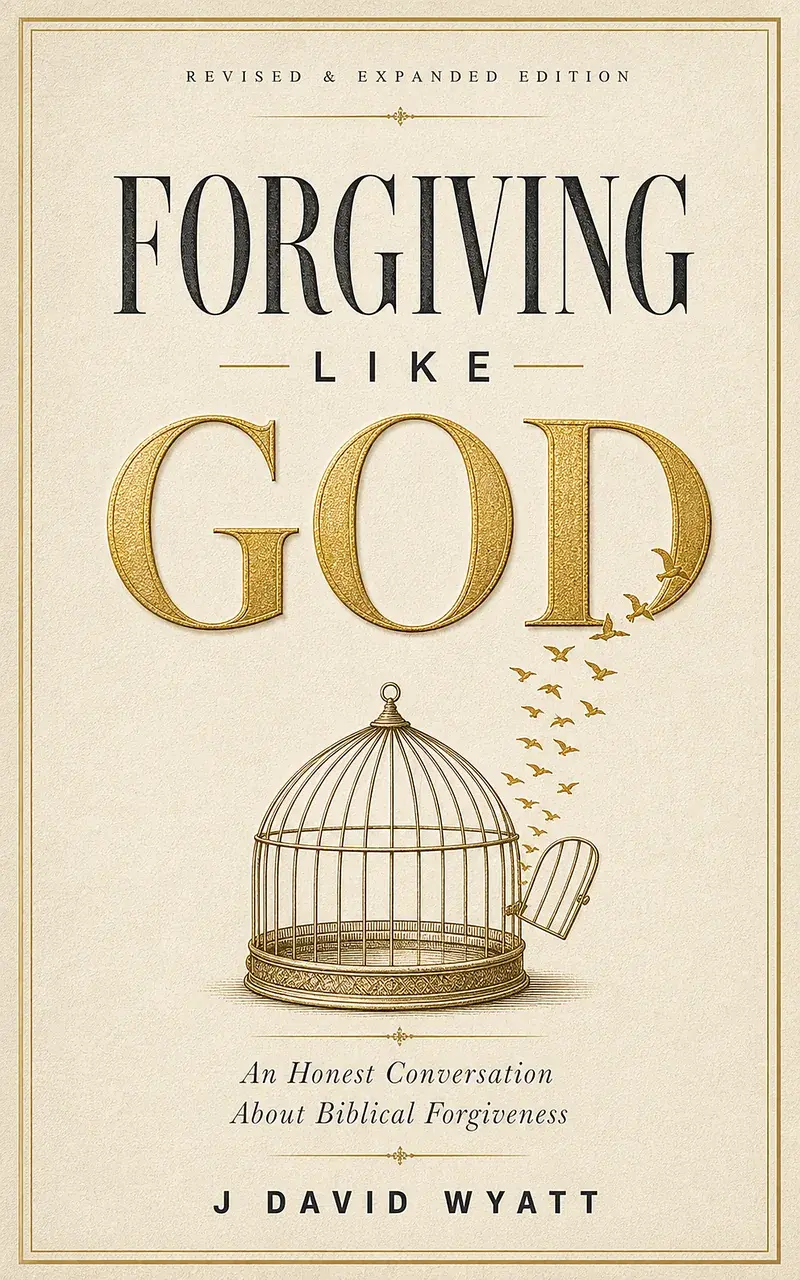
Forgiving Like God: A Conversation with Frank, an AI Persona
by J. David Wyatt
A Scripture-first conversation about repentance, love, forgiveness, and reconciliation. The book asks whether Christians have let slogans replace God's own pattern of forgiveness.
ADD TO YOUR LIBRARY ➔
Unpacking Forgiveness: Biblical Answers for Complex Questions and Deep Wounds
by Chris Brauns
A careful treatment of forgiveness that pushes back against shallow therapeutic slogans and deals honestly with repentance, reconciliation, and deep wounds.
ADD TO YOUR LIBRARY ➔
About David Wyatt
David Wyatt writes about Biblical truth and its practical application in daily life from his home in central North Carolina. His work focuses on helping Christians understand and live out their faith authentically in today's world.