Can You Forgive Someone Who Isn't Sorry?
What Luke 17 teaches about love, repentance, bitterness, and reconciliation

“"Pay attention to yourselves! If your brother sins, rebuke him, and if he repents, forgive him."”Luke 17:3 ESV

You already know who they are.
You didn't click on this title because you're interested in a theological debate. You clicked because there's a face behind that question. A name. Maybe a parent who never acknowledged what they did. An ex-spouse who still insists it was your fault. A friend who walked away without a word and never looked back.
And somewhere along the way, someone — maybe a pastor, maybe a well-meaning friend — told you to "just forgive them." As if forgiveness were a light switch. As if you could flip it and the darkness would disappear.
But here's the thing. When you tried, something didn't sit right. Not because you're bitter or faithless — but because something in your spirit knows that what they're describing doesn't sound like what God actually does.
You're right to wonder. And Scripture has a better answer than "just let it go."
Short Answer
Can you forgive someone who isn't sorry?
Not if we're using the word the way Scripture uses it.
You can love them. You must pray for them. You must refuse revenge. You must put bitterness to death. But Scripture ties forgiveness to repentance, and when repentance is real, forgiveness aims at restored relationship.
That matters, because wounded people do not need slogans. They need truth.
The Tension Nobody Wants to Talk About
Most Christian teaching on forgiveness camps out on one of two sides.
Side one says forgiveness is unconditional. You must forgive whether or not the person repents, because God forgave you unconditionally. They'll point to Matthew 18:22 — forgive "seventy times seven" — and tell you to stop keeping count.
Side two says forgiveness requires repentance. They'll point to Luke 17:3 — "If your brother sins, rebuke him, and if he repents, forgive him" — and tell you that you're under no obligation until the offender turns.
Here's what almost nobody does: put both passages on the table and deal with the tension honestly.
Jesus said both of these things. He wasn't confused. He wasn't contradicting Himself. And if we're going to understand what forgiveness actually looks like when someone isn't sorry, we have to let both texts speak.
What Forgiveness Actually Is
Part of the confusion comes from the fact that we use one English word — "forgiveness" — to describe several different things the Bible treats as distinct.
The Greek word most often translated "forgive" in the Gospels is aphiemi (ἀφίημι). It means "to send away" or "to release." It's a legal term — the language of a creditor canceling a debt. The ledger is cleared. The charge is lifted. This isn't just an emotion. It's a declaration that changes moral standing.
But there's a second word — charizomai (χαρίζομαι) — rooted in charis, the word for grace. This is the word Paul uses in Ephesians 4:32: "forgiving one another, as God in Christ forgave you." It describes forgiveness as a gracious gift flowing from the character of the giver.
Here's the key: aphiemi tells us what forgiveness does — it releases the charge. Charizomai tells us how forgiveness flows — from grace, freely given.
But neither word tells you to pretend the offense didn't happen. And neither word tells you to hand the keys back to someone who hasn't changed.
Does Forgiveness Restore Reconciliation?
Yes. That is the part we have to be careful not to soften.
When God forgives, He does not forgive at arm's length. He restores. The relationship that sin broke is made right. Not partly. Not someday if He feels better about it. Immediately and permanently. That is what makes His forgiveness so wonderful.
For the more direct Bible-answer version of this question, read Biblical Forgiveness Without an Apology.
So when we talk about forgiving like God, we cannot treat reconciliation like a side issue. It is not a bonus feature added later if we happen to be comfortable. Reconciliation is the normal fruit of forgiveness.
Now, that does not mean love waits on repentance. It doesn't. We are commanded to love our enemies, pray for those who hurt us, refuse revenge, and keep bitterness from taking root in our hearts. That posture belongs to us before God whether the other person ever repents or not.
But forgiveness, in the full biblical sense, comes when repentance is real. And when repentance is real, reconciliation should follow. If a brother turns and says, "I repent," and that repentance proves true, we don't get to say, "I forgive you, but I just can't ever be around you." That may sound wise to us. It may even sound safe and spiritual. But if there is no real danger of physical harm, it is hard to square that with the way God forgives us.
The narrow exception is physical safety. If someone is violent, abusive, or dangerous, wisdom may require distance. But even there, distance should not become a baptized refusal to forgive like God. We should still want repentance. We should still want restoration. We should still pray for the day when the relationship can be made right without putting someone in harm's way.
That is a harder teaching than "just let it go." It is also harder than "I forgave them, but I am done with them forever." Scripture presses us deeper than both.
What Does the Bible Say About Forgiving Unrepentant People?
Let's look at the two passages side by side.
Luke 17:3-4 is the clearest statement Jesus makes on the structure of interpersonal forgiveness. The grammar is precise — two parallel conditional chains: If he sins, rebuke him. If he repents, forgive him. The text does not say "if he sins, forgive him." It says "if he repents, forgive him."
And verse 4 doesn't soften this. "If he sins against you seven times in the day, and turns to you seven times, saying, 'I repent,' you must forgive him." Every act of forgiveness in that verse is still tethered to a verbal expression of repentance. The "seven times" isn't removing the condition — it's addressing our temptation to grow weary of forgiving the same person. The point is: never set a limit on how many times you'll respond to genuine repentance.
Think about that for a moment. Jesus is not saying "forgive without condition." He's saying "don't put a cap on your willingness to forgive when the repentance is real."
Mark 11:25, meanwhile, is set in the context of prayer. Jesus is teaching about what happens in your heart when you come before the Father. "Whenever you stand praying, forgive, if you have anything against anyone." This is about the disposition of your heart — the refusal to carry bitterness into the presence of God. It's not a blueprint for relational reconciliation. It's a command about the posture of your soul.
These passages don't contradict. They answer different questions. Mark 11:25 asks: What should your heart look like before God? Luke 17:3 asks: When does the full act of relational forgiveness occur?
The answer to the first is: always. The answer to the second is: when repentance is genuine.
You can love the unrepentant without pretending the relationship is healed.
Does God Forgive Everyone or Only the Repentant?
This is where God's own pattern becomes our teacher.
The "unconditional forgiveness" position often rests on the idea that God forgave us before we repented, so we should do the same for others. But let's look at what God actually does.
God freely offers forgiveness to all. The cross is sufficient for the sins of the whole world. The door is open. The invitation is genuine. "Turn and live!" God pleads through Ezekiel — "Why will you die?" (Ezekiel 18:31-32). That's not the language of a distant judge. That's the anguished invitation of a Father who wants His children home.
But God does not impose forgiveness on those who neither ask nor turn. "If my people... humble themselves, and pray and seek my face and turn from their wicked ways, then I will hear from heaven and will forgive their sin" (2 Chronicles 7:14). Four conditions. Then forgiveness. Not because God's grace is stingy — but because forgiveness, by its very nature, requires someone to receive it.
Scripture holds both truths simultaneously: God's grace is genuinely available to all, and human repentance is a genuine, free response — not something God forces, but something He makes possible. God does not override our freedom by forgiving those who have not turned. And we follow the same pattern.
But What About "Father, Forgive Them"?
Someone will ask about Luke 23:34 — Jesus on the cross saying, "Father, forgive them, for they know not what they do."
Here's what's easy to miss. Look at the grammar. Jesus doesn't say "I forgive you." He says "Father, forgive them." That's a prayer. An intercession. He's petitioning the Father on behalf of people who don't yet understand what they've done.
And how was that prayer answered? Through the preaching of the gospel in Acts. Through people like Paul — who was present at Stephen's stoning and later met the risen Christ on the road to Damascus. The prayer from the cross wasn't answered by bypassing repentance. It was answered through repentance and faith.
Stephen's dying prayer — "Lord, do not hold this sin against them" (Acts 7:60) — follows the same pattern. Intercession. Not absolution. A prayer that God would leave the door open long enough for repentance to walk through it.
These passages model something beautiful: intercessory love for your enemies. Praying for people who hurt you. Refusing bitterness. Desiring their ultimate good. But they are not examples of unconditional relational forgiveness that erases moral accountability without repentance.
Can You Forgive and Still Maintain Boundaries?
Yes. But let me reframe the question, because I think we've been thinking about boundaries in the wrong place.
Boundaries aren't after forgiveness — as if you're forgiving and then holding someone at arm's length anyway. Boundaries are before forgiveness. They belong to the testing period. Because we can't see the human heart the way God does, He allows us — no, He commands us — to test the sincerity of those who claim repentance. We're not withholding love. We're not plotting revenge. We're being "wise as serpents and innocent as doves" (Matthew 10:16).
And here's a crucial insight most teaching on this topic misses entirely. Paul writes, "Be kind to one another, tenderhearted, forgiving one another, as God in Christ forgave you" (Ephesians 4:32). Most people read that "as" to mean because — "forgive others because God forgave you." But that's not what the text says. The word means in the manner of. Forgive one another in the manner God in Christ forgave you.
And how did God in Christ forgive you? After repentance. With full reconciliation as the result. God didn't forgive you while you were still running the other direction and call it done. He drew you, convicted you, waited for your turning — and then the full weight of forgiveness fell, and reconciliation was immediate and complete.
That's the pattern we follow. Not grudging, not bitter, not vengeful — but wise. The greater the harm, the greater the testing. And the testing isn't punishment. It's love in action.
The Joseph Model: What This Looks Like in Practice
Joseph is the prototype.
His brothers sold him into slavery. He spent years in a foreign prison. And when those same brothers walked into Egypt looking for grain — not knowing who he was — Joseph didn't do what most of us would do.
He didn't take revenge. He didn't reveal himself and rage. But he also didn't rush to reconciliation.
Joseph loved his brothers the entire time. He wept behind closed doors when he saw them (Genesis 42:24; 43:30). There was no bitterness. No revenge. Love was unconditional and immediate.
But reconciliation? That was conditional. Joseph tested his brothers — deliberately. He demanded they bring Benjamin. He planted the silver cup. He created a scenario where Judah had to choose whether to sacrifice himself for his brother the way none of them had sacrificed for Joseph.
And when Judah offered his own life in Benjamin's place (Genesis 44:33-34), Joseph saw it. The repentance was real. That's when he broke down and revealed himself. That's when the weeping turned from private grief into public joy.
Love unconditionally. Test repentance wisely. Reconcile joyfully when the change is real.
That's not unforgiveness. That's the biblical model. And it's the pattern God follows with us. Joseph's story was recounted by God in Scripture for a purpose — so that when you're standing in a room with the person who wrecked your life, and they say "I'm sorry," you'd have a model for what to do next.
So What Do You Do Right Now?
If you're reading this with that face still in your mind — the person who hurt you and never said sorry — here's what Scripture actually asks of you:
-
Release the bitterness. Today. Not because they deserve it, but because God does not want resentment to poison your prayers or your soul. This is Mark 11:25. This is love.
-
Pray for them. Follow Jesus's pattern from the cross. Intercede. Ask God to open a door for their repentance. This is not weakness — this is the posture of someone who trusts God with justice.
-
Test wisely. If they claim repentance, you are not required to take their word for it immediately — especially when the harm was deep. The greater the wound, the greater the testing. This isn't punishment. This is wisdom. Model Joseph. Be wise as serpents, gentle as doves.
-
When repentance proves genuine, forgive fully. Don't hold back. Don't set a cap. When the turning is real — demonstrated, not just declared — let the full weight of forgiveness fall and let reconciliation follow. That's the "as God in Christ forgave you" pattern. After repentance, full restoration.
-
Trust God with the outcome. "If possible, so far as it depends on you, live peaceably with all" (Romans 12:18). You control your posture. You don't control theirs. And that's okay. God is just, and His justice will prevail.
You must love. You must be ready and willing to forgive. But only after repentance has been tested. And the greater the harm, the greater the testing.
You are not failing at forgiveness. You are learning to forgive like God — with an open heart, an honest standard, and a love that never gives up hoping for the day the other person finally turns around.
This post grows out of the argument in my book Forgiving Like God. The book works through repentance, bitterness, abuse, self-forgiveness, and reconciliation in more detail, because this question is too important for slogans.
Further Study
I’ve hand-selected these resources because they’ve been vital to my own study. Note: As an Amazon Associate, I earn a small commission from qualifying purchases at no extra cost to you. This helps anchor the mission of The Twice Found.
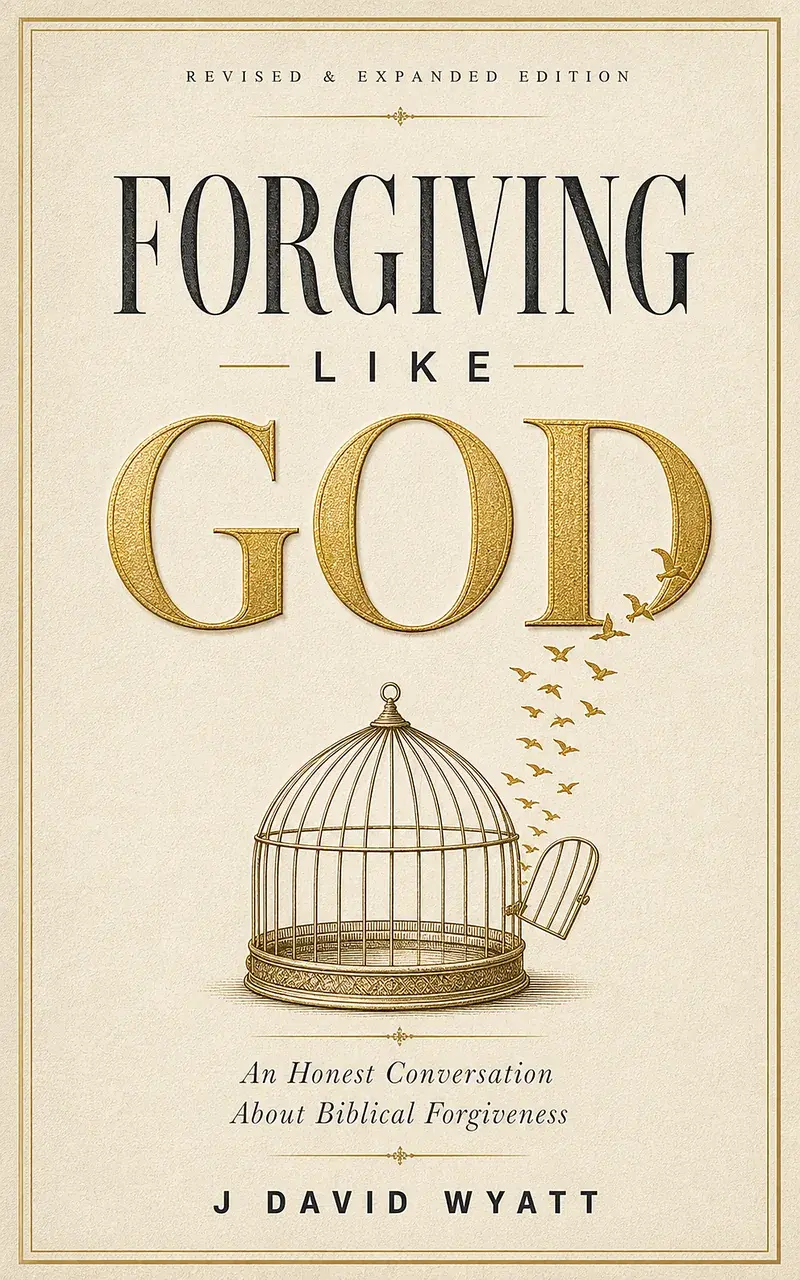
Forgiving Like God: A Conversation with Frank, an AI Persona
by J. David Wyatt
A Scripture-first conversation about repentance, love, forgiveness, and reconciliation. The book asks whether Christians have let slogans replace God's own pattern of forgiveness.
ADD TO YOUR LIBRARY ➔
Unpacking Forgiveness: Biblical Answers for Complex Questions and Deep Wounds
by Chris Brauns
Brauns challenges popular therapeutic notions of forgiveness by arguing that biblical forgiveness is fundamentally conditional on the offender's repentance. Blending real stories with rigorous biblical teaching, this book provides practical, step-by-step guidance for those navigating complex wounds and the difficult questions that arise when people are told to 'just forgive.'
ADD TO YOUR LIBRARY ➔
About David Wyatt
David Wyatt writes about Biblical truth and its practical application in daily life from his home in central North Carolina. His work focuses on helping Christians understand and live out their faith authentically in today's world.